 EN
EN

Open vs. Enclosed Laser Cutting Systems: A Selection Guide from the Perspectives of Safety and Flexibility
You've seen them both on the show floor. On one side, a laser cutter stands proud and open, its cutting head dancing in the air for all to see. On the other, a machine hums quietly inside a sleek, windowed enclosure, like a precision instrument in its own protective capsule. When it's time to invest, this choice often becomes a mental tug-of-war. Do you prioritize the open, adaptable workspace or the secure, integrated cell? Let's cut through the noise and examine this critical decision through the two lenses that matter most on any shop floor: keeping people safe and keeping work flowing.
The Safety Equation: Trust in Protocol or Trust in Steel?
When it comes to safety, open and enclosed systems follow two fundamentally different philosophies.
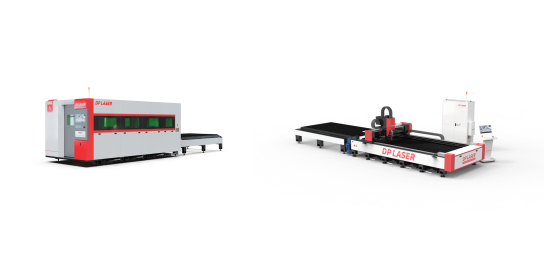
Consider the open-frame laser cutter first. Its approach is based on managed access and active monitoring. It relies on safety light curtains, laser scanners, or pressure-sensitive mats to create a virtual boundary. Intrusion into this zone triggers an immediate stop. This system is highly effective, but its success is built on a foundation of unwavering discipline. It requires a shop culture where safety protocols are respected, tools are never left in the zone, and shortcuts are unthinkable. The payoff for this vigilance is unimpeded access. If your daily work involves maneuvering oversized steel plates with cranes or feeding lengthy, irregular tubes, the absence of physical barriers is not just convenient—it's essential. This system places trust in a combination of advanced sensing technology and human diligence.
Now, look at the enclosed system. Its philosophy is inherent isolation. The heavy-gauge metal enclosure, equipped with safety-interlocked doors, acts as a fortress. It physically contains virtually all laser radiation, sparks, fumes, and noise inside. The interlock mechanism is beautifully simple: if the door isn't closed, the laser won't fire. This design dramatically minimizes human error and simplifies safety management, making it a cornerstone for shops with less experienced operators or those navigating strict international safety certifications. When you evaluate an enclosed system from a manufacturer focused on durability like DP Laser, you're assessing the quality of that fortress—the robustness of the seals, the reliability of the interlocks, and the overall integrity that provides a different kind of operational peace.
The Flexibility Factor: Freedom of Movement or Freedom to Evolve?
"Flexibility" is often the first word associated with open systems, but that's only half the story.
The flexibility of an open laser cutter is tactical and physical. It's the ability to handle the job that walks in the door tomorrow, even if it's a massive, one-off fabrications or a delicate, prototype piece that needs constant visual supervision. There's no shell to limit the size of the part (only the bed dimensions), and loading with overhead cranes or forklifts is straightforward. For the skilled operator, the ability to get close, observe the cut edge, and make real-time adjustments is invaluable. This is hands-on, adaptable flexibility that thrives on variety and problem-solving.
The enclosed system, however, offers a strategic and process-oriented flexibility. That protective shell is not a limitation; it's the perfect platform for integration. This is where flexibility transitions from manual adaptation to automated workflow. Robotic loaders, material towers, and part-conveyor systems integrate seamlessly, transforming the machine into a continuous, lights-out production cell. Its flexibility shines in high-volume, repeatable production where the goal isn't to adapt to each piece, but to produce hundreds of identical pieces with relentless efficiency. Moreover, the sealed environment allows for far superior fume extraction, contributing to a cleaner, healthier shop—a flexible advantage for your entire operation. Choosing an enclosed platform from a forward-thinking supplier often means you're not just buying a machine; you're investing in a node for your future automated factory.
The Real Decision: What's Your Shop's Story?
So, which path is right? The answer lies in your business narrative.
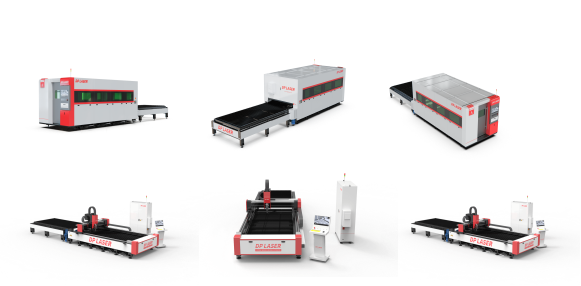
An open laser cutting system might be your protagonist if: You run a custom job shop, an R&D facility, or a service center where no two days are the same. Your competitive edge is handling what others can't—weird sizes, complex materials, and urgent prototypes. You have a seasoned, safety-minded team and your workflow demands maximum physical access to the machine bed.
An enclosed system likely deserves the leading role if: Your plot revolves around batch production, standardized parts, and scaling up. You see automation not as a distant dream, but as the next chapter. A clean, quiet, and easily managed production environment is a priority, or you supply to industries with zero tolerance for safety compromises. You want to lock in consistency and throughput.
Epilogue: Perhaps There's a Bridge Between the Two
The most strategic choice isn't always a binary one. The evolving market now offers intelligent hybrid or upgradeable paths. Some systems feature robust "safety guarding"—partial enclosures that provide more physical protection than light curtains while retaining much of the open system's loading ease. Others are designed with a modular architecture, allowing you to start with a high-performance open frame and later add full enclosures and automation interfaces as your production needs solidify and grow.
Your conversation with a potential supplier shouldn't begin with "which type is better?" It should start with you describing your most challenging workpiece, your three-year growth vision, and your biggest shop-floor headache. A truly consultative partner will listen to that story and help map your needs to a solution that evolves with you. After all, the best machine for your shop isn't just the one that cuts metal today—it's the one that helps you carve out your future.