 EN
EN


The evolution of cutting technology from plasma to laser.
As a veteran in the metal fabrication business, you have no doubt seen some major changes on the shop floor. The once undisputed king of cutting thick plates, plasma cutters, have had their roar and bright flash increasingly joined—and often replaced—by the precise, quiet hum of laser cutters. This trend from plasma to laser cutting is more than just a change of tools. It signifies a paradigm shift in metal cutting. It is a shift from forceful separation to refined precision, from a more manual process to a digitally controlled one. Understanding this journey helps explain why modern shops are making the switch and what it means for the future of manufacturing.
For decades, plasma cutting was the go-to technology for cutting conductive metals, especially steel across various thicknesses. The principle is powerful in its simplicity: a superheated stream of ionized gas (plasma) is forced through a constricted opening, melting the metal while a high-speed gas stream blows the molten material away. It was fast, relatively affordable, and versatile for many metals. For countless workshops, it was the backbone of production.
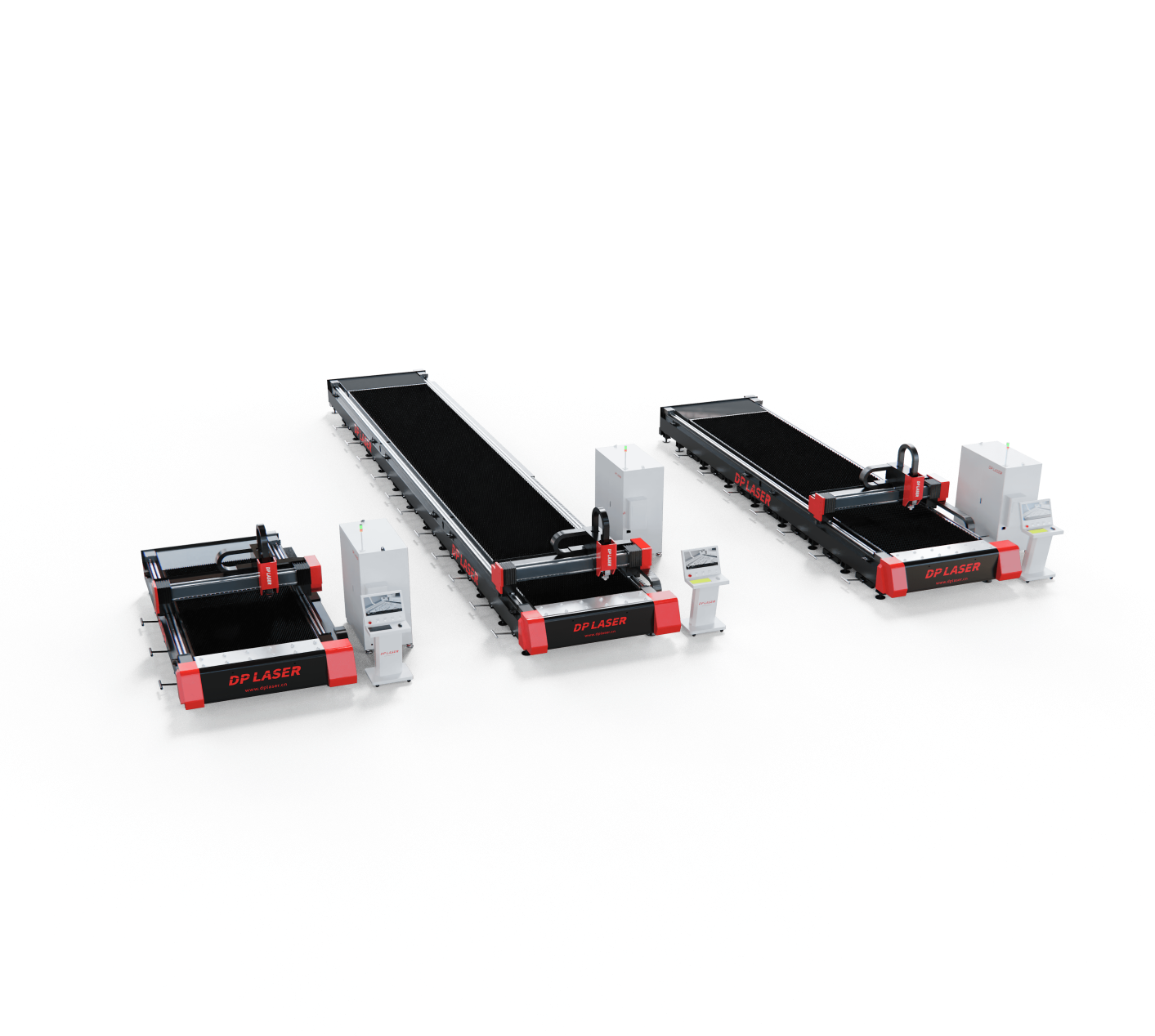
The Trade-offs of Raw Power
That power, however, came with significant trade-offs. The plasma arc is a broad, forceful tool, which means each cut removes a substantial amount of material. The intense, localized heat also creates a wide Heat-Affected Zone (HAZ), altering the material's structural properties near the cut. This process often leaves behind dross—a layer of re-solidified slag on the underside of the cut—almost always necessitating secondary finishing work like grinding or milling. The operation itself is messy, generating considerable smoke, spatter, and noise. While plasma solved the problem of separation, it introduced new challenges in precision, final part quality, and post-processing cost.
The Laser Revolution: A Beam of Light Transforms the Industry
The advancement of fiber laser cutting technology has transformed the industrial landscape. Instead of an uncontrolled jet of superheated matter, laser systems utilize a coherent, concentrated beam of light energy. This fundamental difference is the source of its remarkable advantages.
In a fiber laser system, light generated within an active optical fiber is delivered and focused down to a minuscule point at the cutting head. When this pinpoint energy strikes the metal, it rapidly heats, melts, and vaporizes a tiny area. Assist gases like nitrogen or oxygen then eject the molten material, creating a clean kerf. This evolution from a broad thermal arc to a spot of focused energy redefined what a cutting machine could achieve.
The benefits were immediately clear. The kerf became extremely narrow, conserving material and allowing for intricate designs. Precision reached new heights, with accuracies measured in hundredths of a millimeter. The concentrated heat input minimized the HAZ, preserving the base material's strength. The cut edge was smooth, often with a clean, vertical striation pattern, frequently requiring no additional finishing. For the first time, fabricators could produce parts that were functionally "finished" right off the machine.
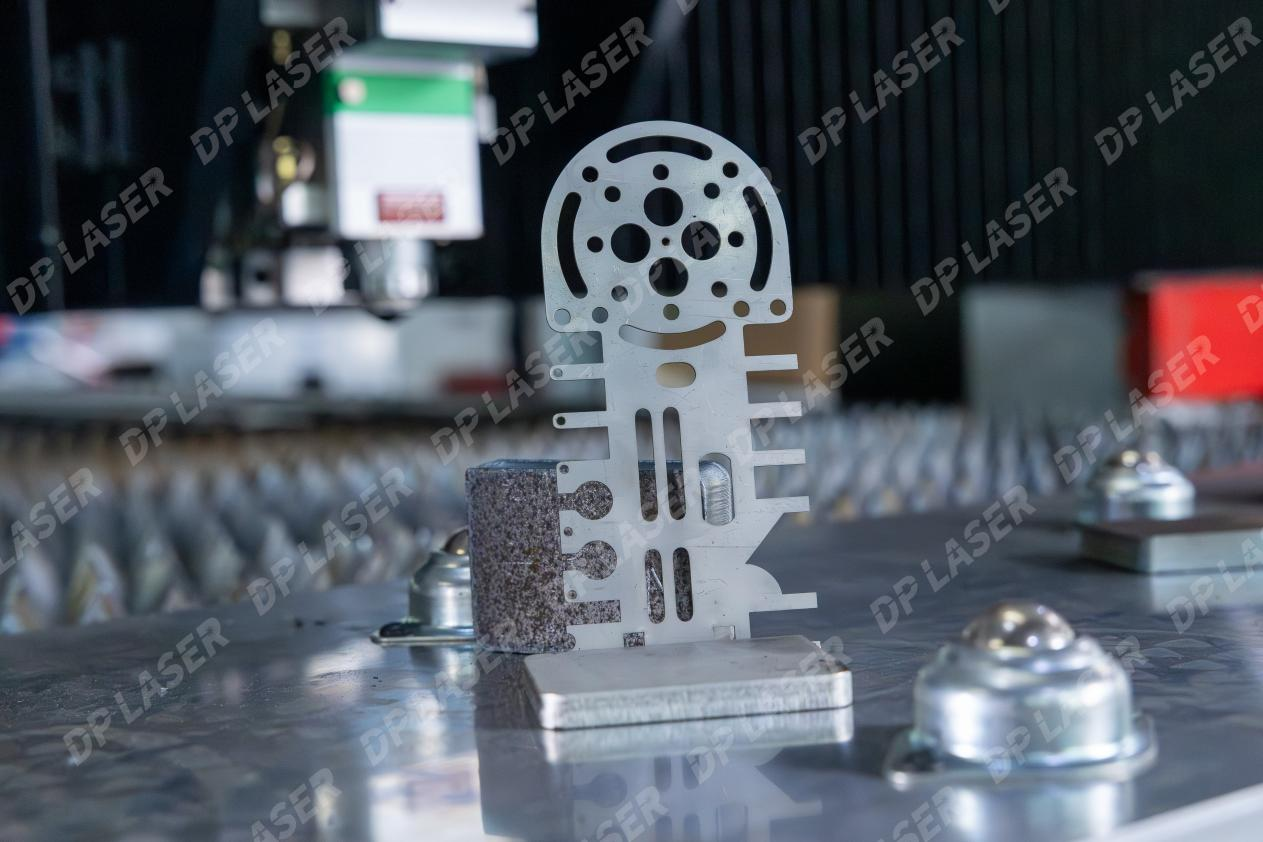
Comparing the Contenders: A Place for Each Technology
While laser cutting dominates many applications, plasma retains a vital role in specific niches. The choice today is less about one being universally superior and more about selecting the right tool for the specific job.
Plasma Cutting: The Specialist for Volume and Thickness
Its primary advantage remains cost-effective cutting of very thick mild steel (often over 25mm). For these heavy-duty applications, equipment and operational costs can be lower. It is also less sensitive to poor surface conditions like rust or paint. For workshops focused strictly on structural steel, shipbuilding, or similar fields, a high-definition plasma system may still be the most practical core solution.
Laser Cutting: The Master of Accuracy and Range
The domain of laser is vast and expanding. Its superiority is clear in thin to medium-thickness metals (up to 25mm, and beyond with high-power lasers), where its speed, accuracy, and edge quality are paramount. It handles a broader range of materials with finesse, including reflective metals like aluminum and copper. The true game-changer is integration; a modern laser cutting machine is inherently digital and can be seamlessly woven into automated production lines with robotic loading for hours of unattended operation. This drives down the cost per part through relentless consistency, superior speed, and reduced labor.

The Impact on Today's Workshops
Shifting from plasma to laser is not merely a technical upgrade; it's an operational overhaul. The drastic reduction in secondary finishing slashes labor time and cost. Material savings from narrower kerfs and optimal nesting directly improve profitability. The capability to produce complex, high-tolerance parts in-house opens doors to new, higher-margin markets. Crucially, the digital nature of laser cutting integrates with CAD/CAM software, creating a smooth, error-resistant flow from digital design to physical part. This digital thread is the foundation of modern smart manufacturing.
What Lies Ahead: Smart and Focused
The evolution is far from over. Laser technology continues to advance rapidly. The development of even higher-power fiber lasers (15kW, 20kW, and beyond) is making thick-section cutting faster and more efficient, steadily encroaching on plasma's last stronghold. Furthermore, the industry is advancing beyond basic 2D sheet cutting. The integration of fiber lasers with 3D robotic arms or 5-axis systems allows for cutting, welding, and drilling on pre-formed parts, enabling complete fabrication of complex components in a single setup.
This progression demands a partner who understands not just the machine, but its role in a rapidly evolving manufacturing ecosystem. Companies that invest deeply in laser R&D and build complete, integrated systems—from the laser source and chiller to the motion control and software—are best positioned to deliver on this promise. They provide not just a cutting machine, but a "full-scenario intelligent solution." A partner like DP Laser, with its focus on innovation and comprehensive support, exemplifies this approach, helping shops navigate this technological evolution to become more competitive, agile, and ready for the future.
In conclusion, the movement from plasma to laser represents a clear progression from raw power to powerful precision. It mirrors the broader industrial shift towards digitalization, automation, and uncompromising quality. For any fabricator looking ahead, understanding and embracing this evolution is not just an option; it is essential for remaining viable and competitive in the modern manufacturing landscape.