 EN
EN

Cost or Investment Why High-End Laser Cutters Pay for Themselves in the Long Run
On the decision-making table of manufacturing, few topics spark fiercer debate than equipment procurement. The dilemma is especially palpable when facing a high-end laser cutter: on one side, there's the tangible, more attractive initial price tag; on the other, the promise of long-term returns that requires greater trust to see clearly. Are we really discussing "cost"? Perhaps we should redefine the essence of this conversation—it's not a one-time expense, but a strategic investment inextricably linked to your production efficiency, profitability, and market position for years to come. True savvy lies in understanding how that more expensive machine quietly pays for itself through the compound interest of time, while continuously generating outsized value.
The Compound Interest of Efficiency: The Overlooked "Currency of Time"
Imagine two workshops at dusk. In Workshop A, the operator hits the stop button as the machine completes the day's task list. In Workshop B, at the same time, the machine is processing a batch of urgent, last-minute orders because it "saved" two hours of capacity during the day through higher efficiency. This is the difference in "time currency" that premium equipment delivers.
This difference isn't magic; it stems from precise engineering details. The excellence of high-end equipment is first evident in its motion system—faster traverse speeds and higher acceleration compress the laser head's movement time between cuts to a minimum. It's like a tireless sprinter, completing every return faster. Second, it has an intelligent "brain." Advanced CNC systems and process databases automatically optimize cutting paths, piercing strategies, and gas parameters for different materials and thicknesses, eliminating large amounts of wasted trial-and-error time. An often-overlooked detail is that with high-end equipment, the contour accuracy and stability when cutting complex graphics or dense small holes ensure "first-time success," requiring almost no reduction in speed or rework. In contrast, ordinary machines often conservatively slow down at corners or fine details to ensure stability, and this elongated processing time accumulates into a staggering figure over days and months. The essence of the efficiency advantage is enabling your machine to produce more sellable, qualified parts under the same consumption of electricity and man-hours. It doesn't just "save" time; it tangibly "produces" extra capacity and profit margin.
The Silent Guardian of Stability: How to Throttle the Neck of Uncertainty
If efficiency is the spear for offense, then stability is the shield guarding the profit baseline. The biggest cost black hole in a workshop often isn't the visible electricity or gas bill, but the "chain reaction collapse" triggered by unstable equipment: an unexpected shutdown can disrupt the entire production rhythm; an undetected accuracy drift can scrap a whole batch of workpieces; a sudden failure of a key component can make you lose the delivery trust of your most important client.
A significant portion of the investment in high-end equipment pays for this "certainty." Its core components—such as the laser source, cutting head, precision guides, and CNC system—come from rigorously validated supply chains, with design life and Mean Time Between Failures (MTBF) often orders of magnitude higher. This translates directly into lower rates of unplanned downtime. For instance, an extremely stable machine features a flat laser power output curve, meaning the ten-thousandth part is cut virtually identical to the first, which is crucial for long batch orders. Another example is the holistic systemic testing philosophy upheld by manufacturers focused on durability, which ensures machines simulate long-term operating conditions before delivery, aiming to transform unpredictable failures into planned preventive maintenance. This stability allows you to evolve from a firefighting "troubleshooter" into a calmly planning "production commander." The resulting reduction in management costs and appreciation in client trust are core assets that, while difficult to quantify on financial statements, are very real.
The Premium Power of Precision: The Key to Unlocking the Profit Ceiling
When the discussion upgrades from "can it cut" to "how well does it cut," the rules of the profit game change. What high-end laser cutters provide is precisely this ability to define "quality standards."
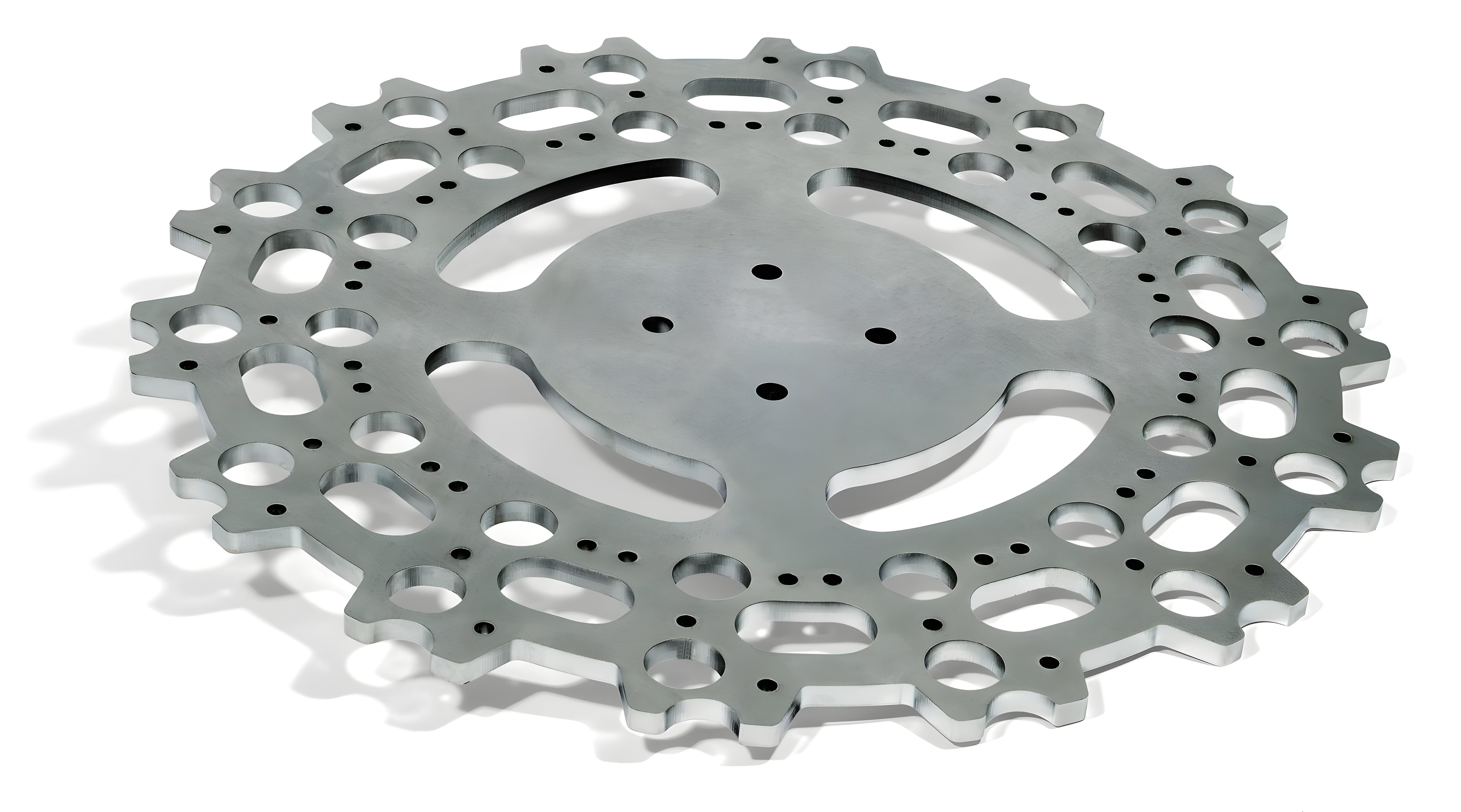
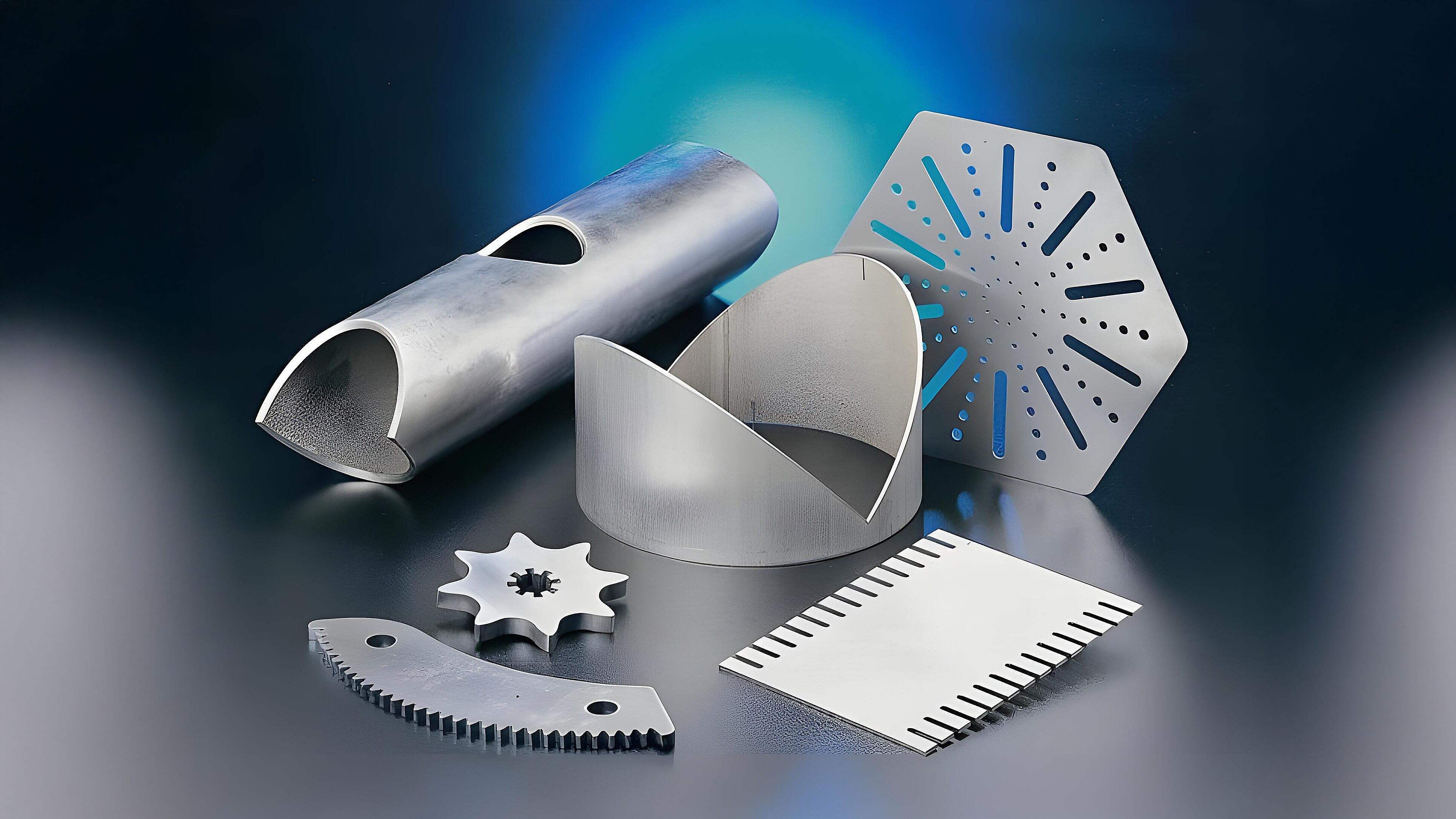
This capability first saves costs directly. Nearly vertical kerfs and extremely fine dross (or even dross-free) mean most workpieces can proceed directly to welding or assembly, saving the labor, equipment, and time required for secondary grinding or cleaning. For a cabinet requiring subsequent high-precision assembly, its bending accuracy depends directly on the positional consistency of the cut holes. The micron-level repeatability provided by high-end equipment translates directly into money here. More importantly, this consistently high processing quality is a market passport. It enables your factory to take on orders for precision instrument housings, high-end elevator decorative panels, or new energy vehicle battery trays—applications with dual stringent demands on aesthetics and functionality. In these fields, clients are not just buying parts; they are buying "reliable perfection." They are willing to pay a premium of 30% or more for this reliability. Therefore, high-end equipment is not merely a production tool; it is the engine for your business upgrade, directly moving you from the fiercely competitive red ocean into more profitable blue waters.
Future-Proof Adaptability: Ensuring Today's Investment Isn't Obsolete Tomorrow
The wave of technology never ceases. What seems cutting-edge today—automated loading/unloading, digital twin monitoring, deep integration with MES systems—may become standard tomorrow. A machine that only meets current needs is a consumable; one that reserves space for future evolution is a true asset.
The design philosophy of high-end platforms is often "forward-compatible." They may possess more robust bus architectures, reserving physical space and electrical capacity for future automation add-ons. Their control systems might be open or deeply customizable, facilitating the future integration of new software modules or process packages. For instance, when designing its high-end series, a forward-thinking manufacturer considers the possibility of a client upgrading from manual loading to a flexible material warehouse within three years. This means your investment today isn't locked into today's technological level. When market demands change and you need to cut new materials (like composites or thicker metals), a powerful hardware platform might only require a software upgrade or replacing certain modules to cope, rather than a complete machine replacement. This "evolvability" significantly extends the investment's lifecycle, reducing the risk of sunk costs due to technological iteration.
Conclusion: Become a Value Investor, Not a Price Hunter
Ultimately, the choice before a high-end laser cutter reflects a manager's understanding of the essence of their business. Viewing equipment as a "cost" centers on action to compress and control, with eyes fixed on the initial quote. Viewing it as an "investment" centers on action to evaluate and empower, with vision penetrating to improved cash flow, solidified market position, and enhanced risk resilience over the next five years.
That higher price tag purchases more powerful time-output capability, more robust operational certainty, broader profit premium potential, and more composed adaptability to the future. As manufacturing moves toward intelligence and refinement, possessing equipment that can consistently, stably, and with high quality create value means holding the most reliable lever of productivity. If you calculate the total cost of ownership versus total output value over the next three to five years, the answer often becomes strikingly clear: the wisest investment is choosing the long-term partner that lets you forget the price, while continually reaping pleasant surprises for years to come.